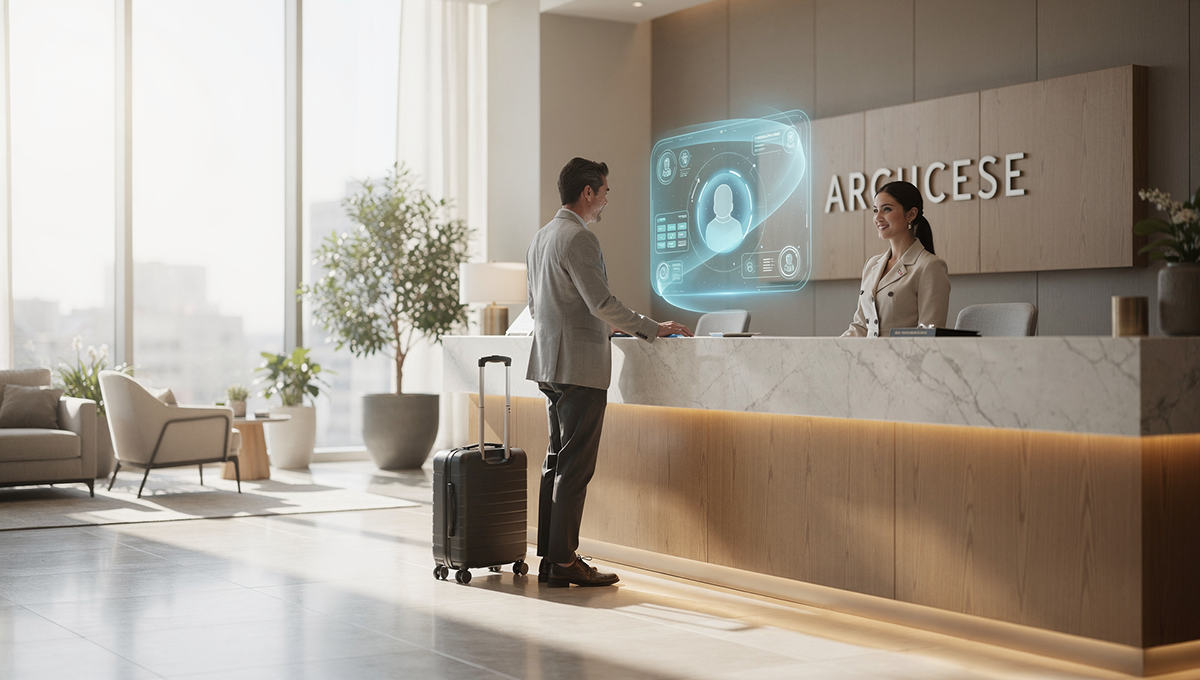
Mexico’s hotel industry is gearing up for a quiet revolution. While tourists enjoy paradise beaches and charming “Pueblos Mágicos,” behind the scenes artificial intelligence is transforming everything from how room rates are set to the welcome message you receive on WhatsApp. With the 2026 World Cup on the horizon and a hotel market valued at $57.8 billion, Mexico faces the challenge of digitizing its 24,000 hotels, or risking invisibility in a world where 92% of travelers research online before booking.
📊 Key Highlights
- ✓ Grupo Posadas has implemented AI in 120 hotels – Its digital concierge handles 60-80% of inquiries automatically with 94% satisfaction
- ✓ Smart revenue management increases revenue by 17% – Algorithms adjust prices in real time by analyzing occupancy, weather and competitors
- ✓ Only 30-40% of hotels in Mexico are digitized – The digital divide threatens to make properties without a digital presence “invisible” by 2026
Your next concierge could be a chatbot (and it’ll answer faster)
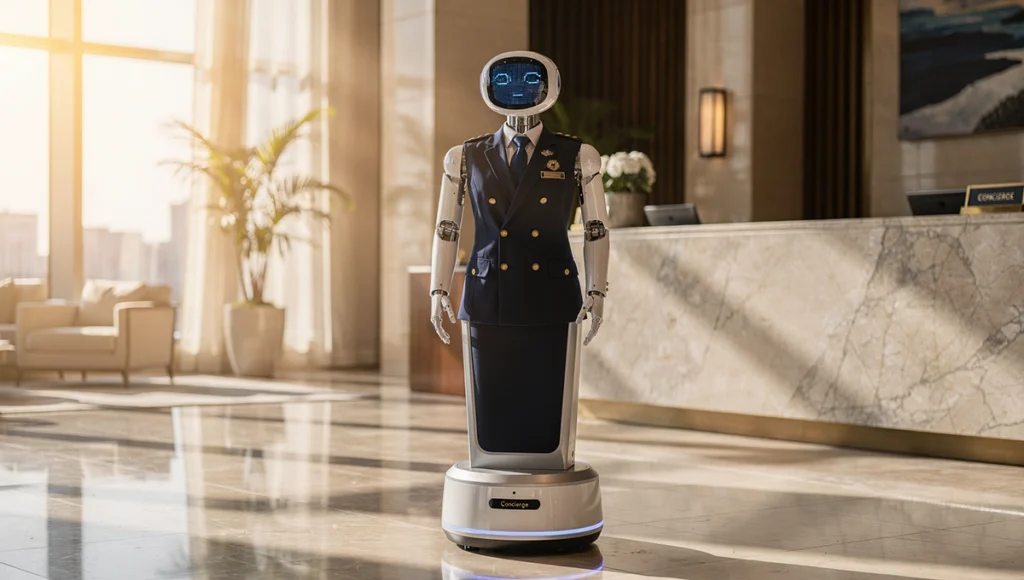
The most visible trend is the spread of virtual assistants powered by generative AI. Grupo Posadas, the Mexican hotel giant with more than 200 properties, has rolled out its “AI Digital Concierge” across 120 hotels under the Live Aqua, Grand Fiesta Americana and Fiesta Inn brands since 2022. The system works 24/7 via messaging, handling everything from restaurant reservations to requests for extra pillows.
“At Grupo Posadas, we are committed to remaining a leader in hospitality guest services. We recognize that today’s guests are expecting more immediate contactless digital engagement,” explained Leslie Gomes, Brand Director at Grupo Posadas, when announcing the rollout.
The numbers back the bet: according to Hotel Tech Report, hotel chatbots automatically answer between 60% and 80% of inquiries, cutting calls to the front desk by up to 40% and achieving satisfaction scores above 94%. By 2026, the industry expects to move toward what experts call “agentic AI”: systems that don’t just answer questions but take action on their own, such as modifying reservations or creating housekeeping orders without human intervention.
Revenue management: the art of charging the perfect price
Perhaps where AI is having the greatest impact, though it’s less visible to guests, is in dynamic pricing. Machine learning-driven revenue management systems analyze factors such as historical occupancy, local events, weather and even competitors’ rates in real time to adjust prices automatically.
Banyan Tree Mayakoba, a luxury resort in the Riviera Maya, already uses Duetto’s system to optimize its revenue strategy. Industry-wide results are striking: hotels using these tools report 17% higher total revenue than those that don’t, according to McKinsey. Greg Land, Senior Vice President at AWS, sums it up: “2025 is the year of real use cases. Hotel companies have gotten serious about architecting their data so that it can be used by AI.”
The trend for 2026 points toward “total revenue management”: analyzing not just the room rate but each guest’s entire spend on restaurants, spa and activities to maximize total revenue per visitor.
Personalization: the hotel that remembers you
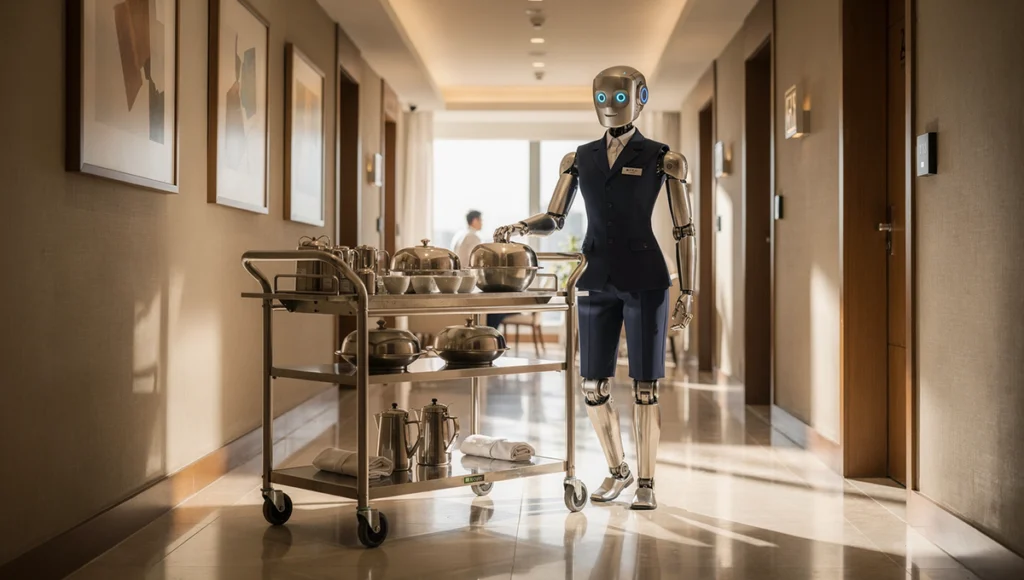
AI-driven personalization is redefining what “exceptional service” means. Chains like Hilton already use systems that analyze each guest’s history to anticipate their needs. If you asked for soft pillows on your last visit, your room will have them without you needing to ask again.
Grupo Posadas has taken this further by integrating Medallia for real-time experience analytics. “Thanks to Medallia’s technology, we now have a deeper, more dynamic read on our guest experiences, which allows us to anticipate our customers’ needs,” said Javier Barrera, VP of Strategy at Posadas. The result: a Net Promoter Score of 64 points, 31 points above the Latin American average.
For boutique hotels, personalization is a unique opportunity: those that implement these technologies report 25% to 30% increases in ancillary revenue per guest, from room upgrades to premium dining experiences.
Digital keys and facial recognition: the check-in of the future
Traditional check-in, with its lines, IDs and paperwork, is on its way out. 86% of guests already prefer contactless technologies, and biometrics is emerging as the most elegant solution. In December 2025, Dubai launched a city-wide biometric check-in system that lets guests upload their details by phone and authenticate with facial recognition when they arrive at the hotel, completing the process in about a minute.
In Mexico, Palace Resorts, the Yucatán-based luxury group with properties such as Moon Palace, the largest hotel in the Americas, has implemented smart mobile apps that automatically prioritize guests by departure date to guarantee their dining experiences. “Implementing RISE with SAP has allowed us to keep the essentials in place while adding personalization to the guest experience,” explained Anuar Chapur, Vice President of Technology at The Palace Company.
The elephant in the room: Mexico’s challenges

However, the outlook isn’t uniformly rosy. Mexico faces specific obstacles that complicate the widespread adoption of these technologies.
The digital divide is perhaps the biggest. While internet access reaches 86.9% in urban areas, it drops to just 68.5% in rural areas, an 18-point gap that directly affects emerging tourist destinations. “The lack of connectivity in rural areas limits the rollout of electronic terminals and creates inequality between tourist destinations,” warns one industry analysis.
Jorge Herrera of CommScope is even more direct about the regional situation: “In Mexico, as in other Latin American countries, the existing lag is a huge opportunity. Only about 30% or 40% of the region’s hotel sector has taken real steps to meet guests’ technology needs.”
The starkest warning comes from Faustino Martínez, CEO of Gueest, a partner of Mexico’s Tourism Ministry (SECTUR) on digitization projects: “Digitizing tourism is an urgent need; very soon, hotels and businesses without a certain level of digitization will simply become invisible and disappear.”
Mexican startups: innovation from within
In response to these challenges, an ecosystem of 135 Mexican proptech startups is developing solutions tailored to the local market. GuruHotel, founded by Josué Gio and Stiven Martínez, offers platforms that let independent hotels compete with big chains by reducing their dependence on intermediaries like Booking.com.
Casai, with a presence in Mexico City and Brazil, operates apartments equipped with voice assistants and app-controlled locks. Vertika Hub has developed an AI agent for WhatsApp Business that automates commission-free direct bookings, taking advantage of the fact that WhatsApp is Mexico’s dominant communication channel.
Iberostar, for its part, announced the arrival in Mexico of BRAIAN, its AI-powered virtual operator for energy efficiency, which is already running at its Cancún property, analyzing occupancy and weather data to optimize consumption.
What’s next: the 2026 World Cup as a catalyst

The 2026 FIFA World Cup, with Mexico as a host country, serves as a natural deadline for many of these implementations. The pressure to serve millions of international visitors is accelerating investment: Grupo Posadas plans to open 34 new hotels with 4,800 rooms, an investment of $880 million.
Industry projections indicate that by 2026, about 40% of hotel bookings will go through AI environments, from chatbots answering questions to algorithms deciding which hotel to recommend. Hotels that don’t optimize their digital presence to be “read” by these AI systems risk becoming invisible to a generation of travelers who plan their trips by talking to virtual assistants.
Conclusion: technology with a human touch
The paradox of artificial intelligence in Mexican hospitality is that its success will depend on how well it complements, rather than replaces, the human warmth that defines the country’s hospitality. The most promising technologies are those that free staff from repetitive tasks so they can spend more time on genuine interactions with guests.
As Matt Schwartz of Sage Hospitality puts it: “AI-driven automation can take over repetitive back-office functions, enabling staff to move to guest-facing roles. Employees once tied up with phone calls or manual data entry can now spend more time engaging with guests.”
The future of Mexican hospitality isn’t a robot at the front desk, but an employee who greets you with a smile because AI has already taken care of the paperwork.
References
- PR Newswire – Grupo Posadas Selects VenueLytics to Power Their AI Digital Concierge Project: https://www.prnewswire.com/news-releases/grupo-posadas-selects-venuelytics-to-power-their-ai-digital-concierge-project-301464957.html
- Excélsior – Posadas reaches record satisfaction after digitization (in Spanish): https://www.excelsior.com.mx/nacional/posadas-alcanza-record-satisfaccion-tras-digitalizacion
- SAP News Latin America – The Palace Company redefines the hotel experience with cutting-edge technology (in Spanish): https://news.sap.com/latinamerica/2024/09/the-palace-company-redefine-la-experiencia-hotelera-con-tecnologia-de-punta/
- Hosteltur – Mexico launches the digitization of independent hotels (in Spanish): https://www.hosteltur.com/lat/146853_mexico-pone-en-marcha-la-digitalizacion-de-hoteles-independientes.html
- CBRE – MarketView Hospitality and Tourism Mexico H1 2025 (in Spanish): https://www.cbre.com.mx/press-releases/marketview-hoteleria-y-turismo-mexico-1s-2025
- Mordor Intelligence – Hospitality Industry in Mexico: https://www.mordorintelligence.ar/industry-reports/hospitality-industry-in-mexico
- Hospitality Net – Hospitality Trends for 2026: https://www.hospitalitynet.org/news/4130348.html
- Hotel Tech Report – AI in Hospitality: https://hoteltechreport.com/news/ai-in-hospitality
- Concierge Magazine – Iberostar announces an AI system coming to its hotels in Mexico (in Spanish): https://conciergemagazine.com.mx/iberostar-anuncia-sistema-de-inteligencia-artificial-que-llegara-a-sus-hoteles-en-mexico/
- myHotel – Artificial intelligence in Latin American hotels (in Spanish): https://myhotel.cl/tecnologia/inteligencia-artificial-hoteles-latam/
- ACIS – Network infrastructure challenges for the hotel sector (in Spanish): https://acis.org.co/portal/content/¿qué-retos-presenta-para-el-sector-hotelería-la-infraestructura-de-redes-en-la-era-digital
- Estrategia Magazine – AI promises to transform the hotel industry in 2025 (in Spanish): https://estrategiamagazine.mx/la-inteligencia-artificial-promete-transformar-la-hoteleria-en-2025/
- Duetto – Revenue Strategy Forum Mexico 2025: https://www.duettocloud.com/duetto-rsf-mexico-2025-register
- SECTUR – Mexico exceeds tourism expectations in summer 2025 (in Spanish): https://www.gob.mx/sectur/articulos/sectur-mexico-supera-todas-las-expectativas-de-turismo-durante-el-verano-2025
- Biometric Update – Dubai launches city-wide biometric hotel check-in: https://www.biometricupdate.com/202512/dubai-launches-city-wide-biometric-hotel-check-in