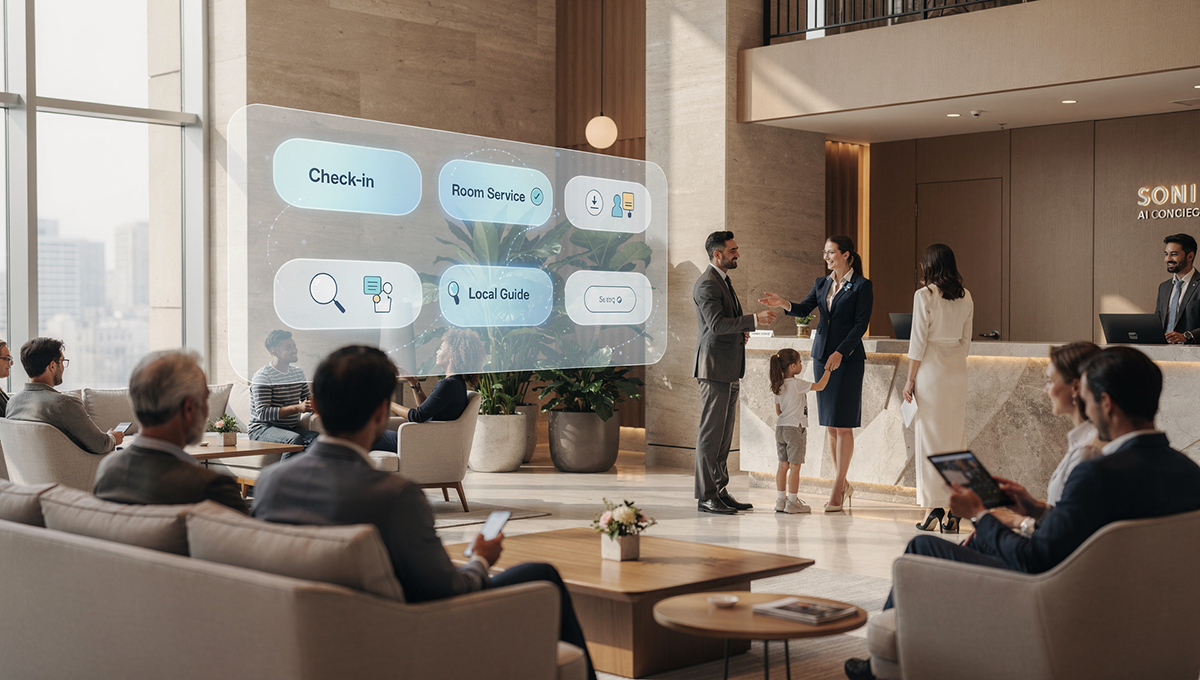
Technology is no longer the exclusive territory of big hotel chains. Boutique hotels are discovering that automation gives them a competitive edge: delivering personalized experiences, operating with lean teams and keeping the intimate touch that defines them. According to Oracle Hospitality, 71% of guests prefer hotels with contactless check-in options, while Spain’s Hotel Technology Institute (ITH) found that 1 in 3 travelers considers technology a deciding factor when choosing where to stay.
Three key points about hotel automation
- Real operational savings: Smart room systems cut energy consumption by 20% to 45%, while automated guest communications free up to 4 hours a day for front desk staff.
- Guests are asking for it: 73% of travelers prefer hotels with technology that minimizes contact with staff, and 89% of millennials are willing to use mobile check-in.
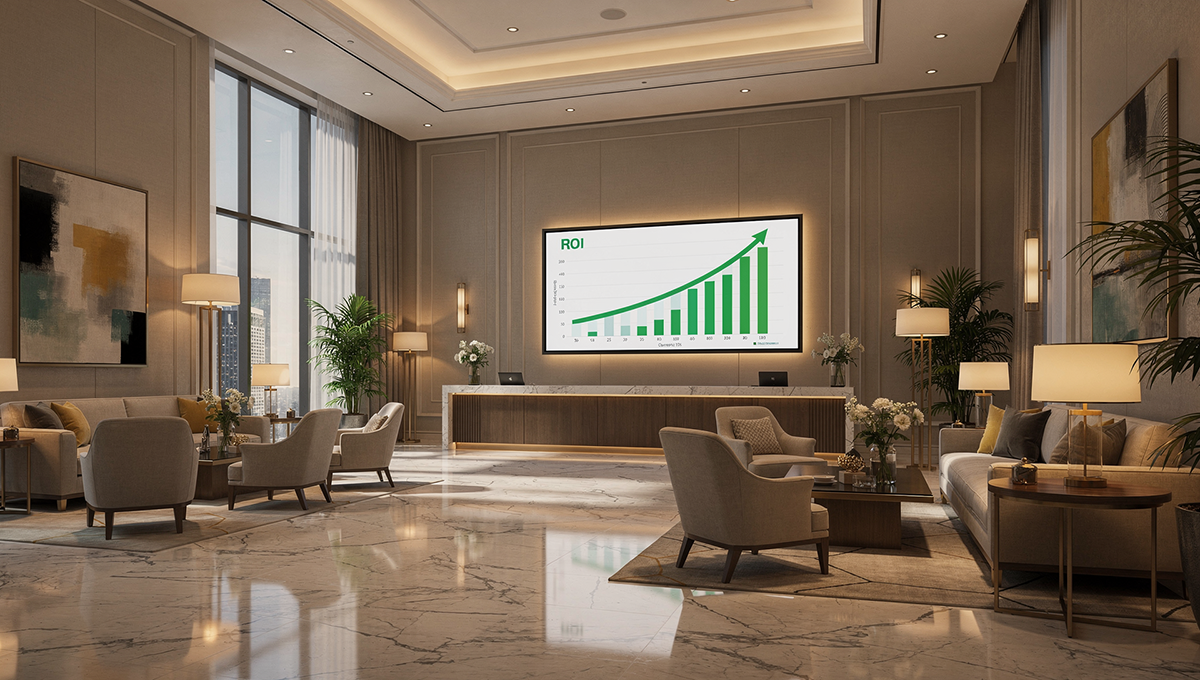
- Measurable return on investment: Hotels with digital check-in report 23% higher guest satisfaction and up to a 35% increase in ancillary sales through automated upselling.
Frictionless check-in: first impressions count
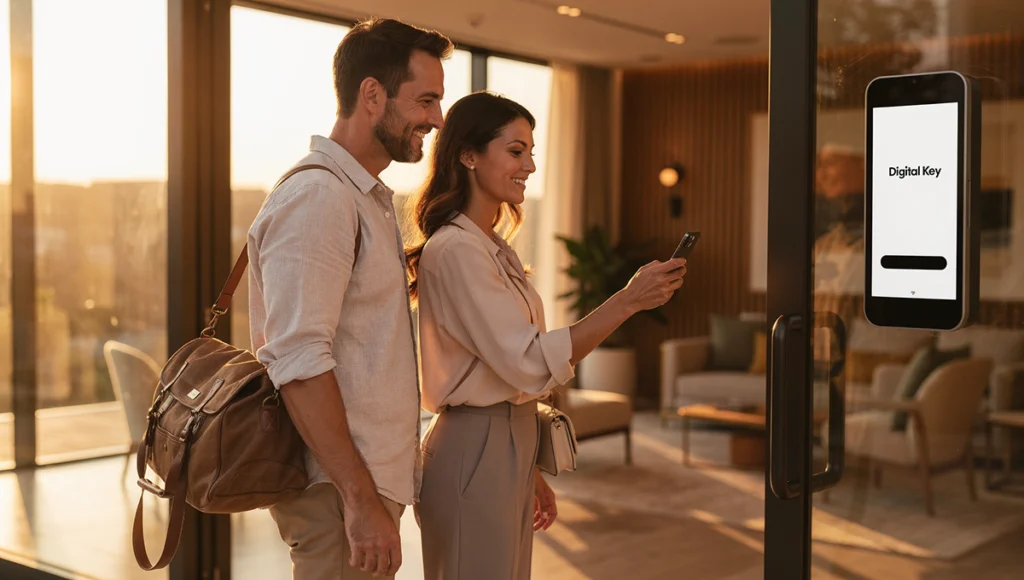
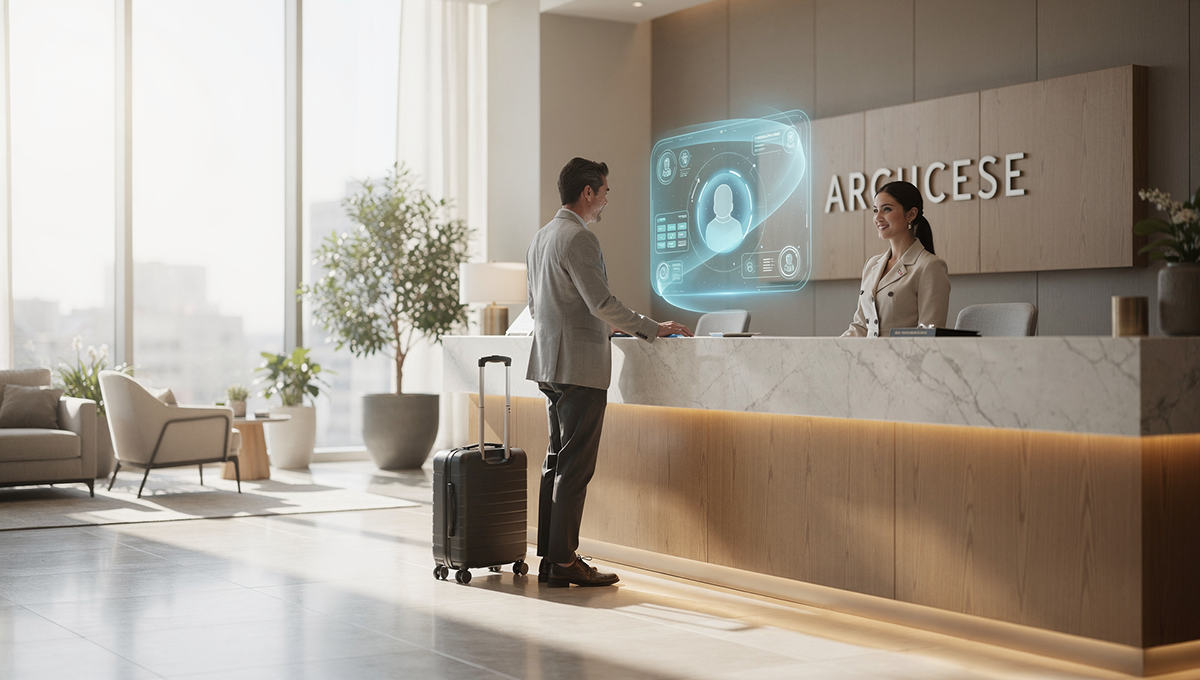
The moment of arrival defines the whole experience. A traditional check-in takes 8 to 12 minutes; a digital one, less than 3. For a boutique hotel with a small front desk or no night staff, that’s the difference between a happy guest and a frustrated one who arrived late after a delayed flight.
Options range from the very simple to the sophisticated. Web check-in through a link sent by email or WhatsApp doesn’t require guests to download any app. Temporary PIN codes on existing locks allow self-service access with minimal investment. For those looking for deeper integration, Bluetooth smart locks such as those from Omnitec Systems or ASSA ABLOY turn the guest’s smartphone into a key and sync automatically with the property management system.
Providers such as Civitfun and Check-in Scan offer solutions tailored to the Spanish market, including automatic submission of guest registration forms to the authorities, so hotels stay compliant without any manual work.
The PMS as the brain of the hotel
Hotel management software has evolved from a simple database into an intelligent operations hub. For boutique hotels with 10 to 50 rooms, platforms such as Cloudbeds, Amenitiz and Little Hotelier combine reservation management, a channel manager and a booking engine in a single tool, with prices starting at 3 euros per room per month.
The real magic happens when the PMS connects with other systems. A guest books on Booking.com, automatically receives a personalized confirmation email, completes online check-in three days before arrival, and when they get there, the room’s temperature and lighting are already set to their preferences from previous stays. According to Hotel Tech Report, 91% of hoteliers say a well-implemented PMS directly drives revenue growth.
WhatsApp: the channel guests actually use
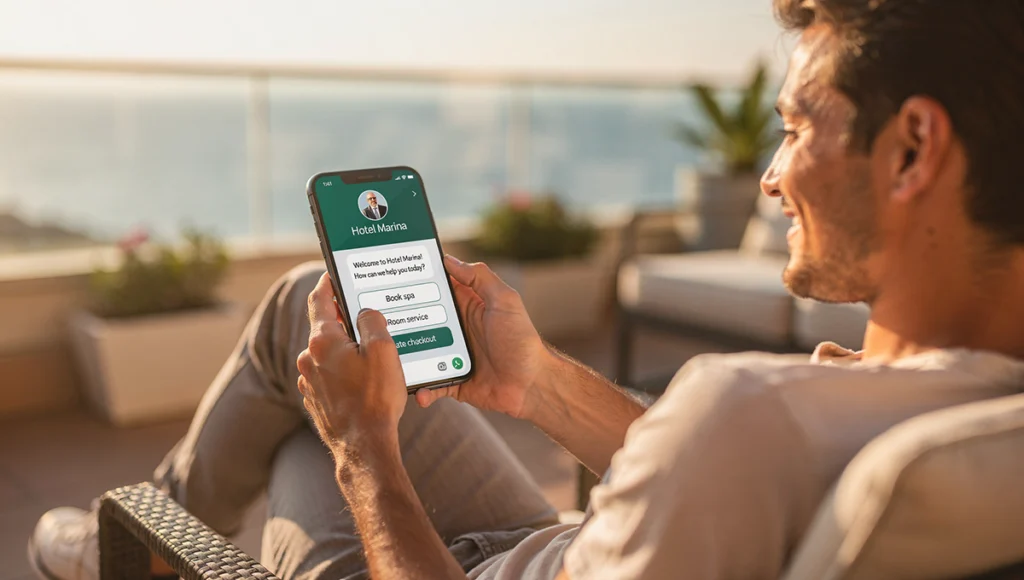
Email has a 40% open rate. WhatsApp reaches 95%. That difference explains why platforms like HiJiffy are revolutionizing hotel communication with AI assistants that answer questions in more than 100 languages, process bookings and handle requests around the clock.
Hotel Gran Bilbao automated 90% of its 45,000 yearly conversations with this technology, freeing its team for the interactions that truly need a human touch. For a boutique hotel, this means offering instant service without adding staff: the chatbot answers questions about hours, Wi-Fi or amenities, while special requests go straight to the right person.
Rooms that think for themselves
Hotel room automation has matured to the point where there are affordable solutions for small properties. Systems such as Vimar Well-Contact Plus and Loxone let guests control lighting, climate and curtains from an in-room tablet or by voice with Alexa for Hospitality.
The operational benefit is immediate: occupancy sensors that turn off the lights and turn down the climate control when the room is empty, window sensors that pause the air conditioning when a window is opened, and automatic pre-heating or pre-cooling just before check-in. According to Zennio, a KNX automation specialist, these systems cut heating and cooling consumption by 20% to 30%.
For guests, the experience is memorable: arriving at a room that already knows their preferred temperature, adjusting the lights with “Alexa, reading mode,” or ordering room service without picking up the phone. London’s Eccleston Square Hotel has made these features its main differentiator, with smart-glass walls that switch from clear to opaque and massage beds controlled by iPad.
Gradual implementation: the sensible path

There’s no need to transform the whole hotel at once. A proven strategy for boutique hotels starts with online check-in through a simple web link, with no hardware investment. The second step adds automated communications via WhatsApp to lighten the load on the front desk. Finally, smart room controls can be rolled out first in suites or premium rooms, measuring the results before expanding.
The smart hotel technology market will reach $74.8 billion by 2029, according to industry projections. Boutique hotels that adopt these tools now won’t just cut operating costs: they’ll position themselves as innovative properties for an increasingly digital traveler, without losing the personal character that defines them.
Conclusion
Automation in boutique hotels doesn’t replace the warmth of personal service; it amplifies it. When technology handles the repetitive tasks, the team can focus on what truly sets these properties apart: creating memorable experiences. Automatic check-in at 2 a.m., a chatbot that answers in Japanese, a room that saves energy without anyone noticing: these small automations are what allow a 20-room hotel to deliver service on par with chains that have hundreds of employees.